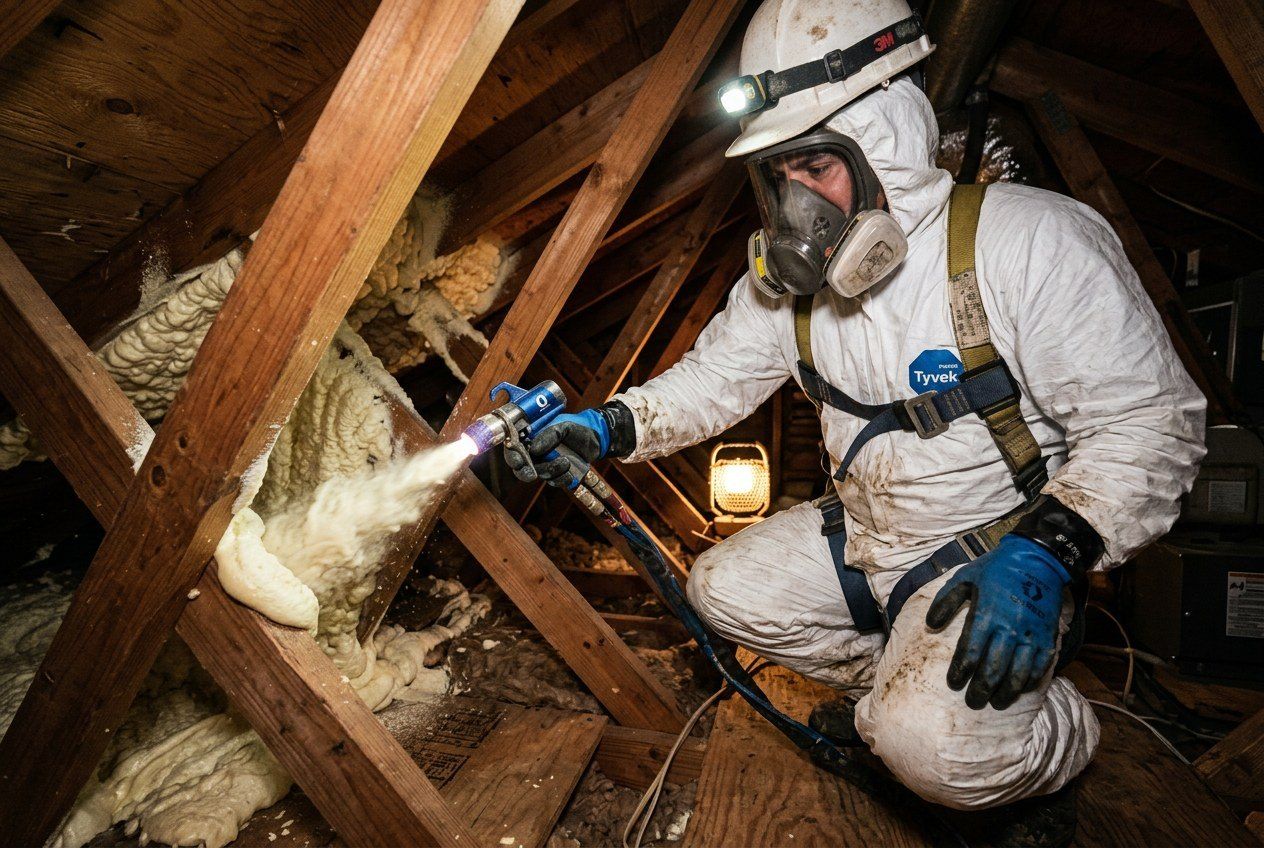
Spray foam is a chemical reaction carried out on site. Most problems trace back to how and where it was sprayed rather than to foam itself.
1. Lingering odor
Spray polyurethane foam is made by mixing two liquids at the gun: an isocyanate (A side) and a polyol blend (B side). When the ratio, temperature or substrate is wrong, the foam may not cure completely and can leave a persistent fishy or chemical smell. OSHA notes that isocyanates can cause asthma and can sensitize people who are exposed, so that later exposures trigger reactions; that is why installers wear supplied-air or cartridge respirators and full suits, and why occupants are told to stay out during spraying and for the re-occupancy period the manufacturer specifies, often 24 hours or more.
Prevention: a trained crew using the manufacturer's process, proper ventilation during and after the job, and staying out of the house for the full re-occupancy time. If an odor persists for weeks, ask the installer and manufacturer to inspect; badly cured foam sometimes has to be removed.
2. Shrinkage and pull-away
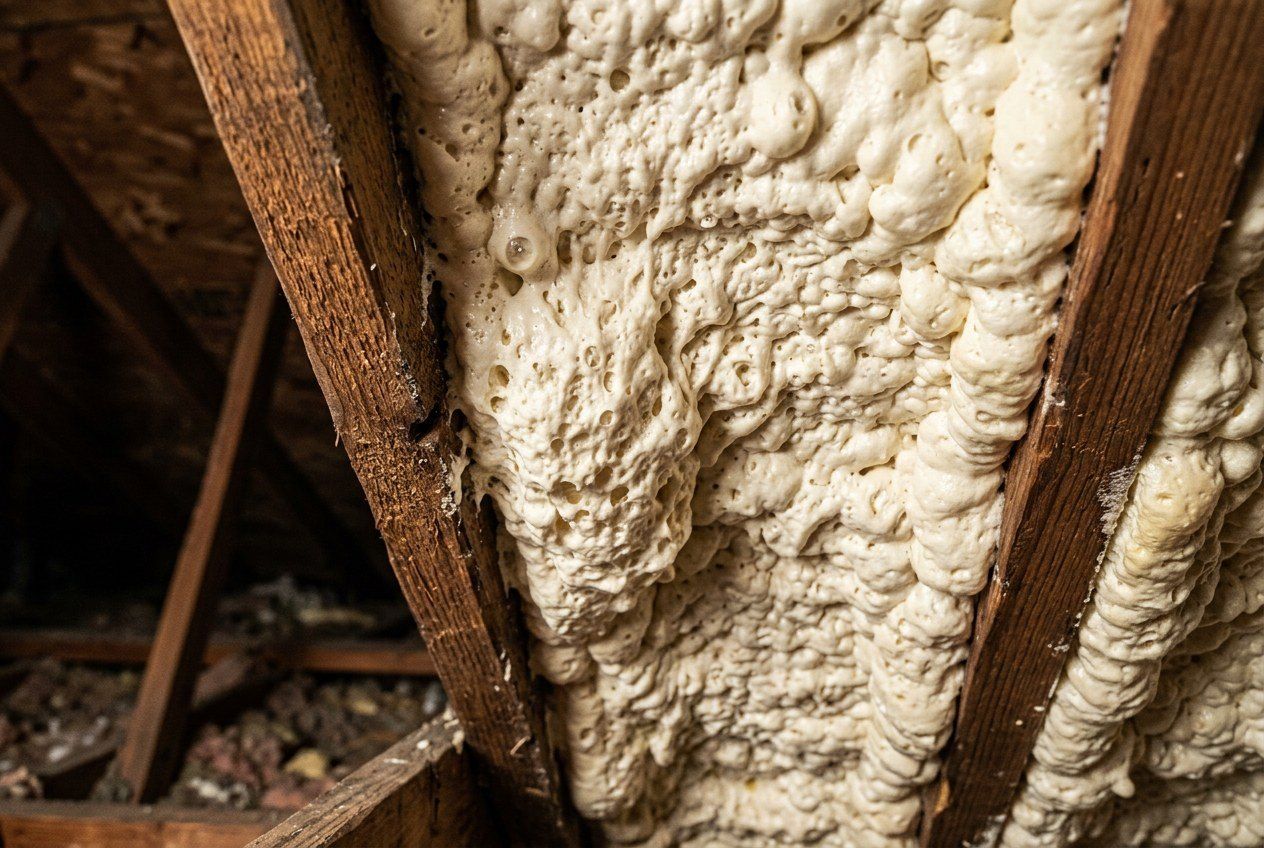
Foam that is sprayed too thick in one pass, in the wrong conditions or onto a cold or damp surface can shrink as it cures and pull away from framing, leaving cracks along the studs or rafters. Those gaps undo the air sealing that was the reason for choosing foam.
Prevention: application in passes at the thickness the data sheet allows, within its temperature and humidity limits. Inspect the edges before anything is covered.
3. Thin or uneven coverage
Thickness is where corners get cut, because it is invisible once the attic is finished. A roof deck specified at 5.5 inches of open-cell can easily average 4 inches in places nobody checks.
Prevention: get the thickness per area in writing and check it with a depth gauge in several spots while the work is visible. Our installer checklist covers this in detail.
4. Roof leaks you cannot see
With foam on the underside of the roof deck, a small leak may not show as a ceiling stain. Water can travel along the deck and soak in. Have the roof inspected and repaired before foaming, keep records of its condition, and look at the foam surface for discoloration after storms. Some roofers want access to the deck from below for inspections; ask yours before spraying.
5. Moisture in the roof deck
Open-cell foam is vapor-permeable. In humid climates there have been cases where indoor moisture moved into open-cell foam and condensed on the cooler roof sheathing, particularly where the attic had no supply air or dehumidification. Building scientists generally recommend that an unvented attic be treated as part of the conditioned house, with some air supply or dehumidification, and that the design follow the code provisions for unvented attics. See vented vs. unvented attics.
6. Missing thermal or ignition barrier
Foam plastic insulation is combustible. Building codes generally require it to be separated from living space by a thermal barrier such as half-inch drywall, and in many attics and crawl spaces covered by an ignition barrier or an approved intumescent coating, unless the specific product has been tested for exposed use in that location. Ask which applies and get it in the scope.
7. Wrong foam for the job
Closed-cell foam on both sides of an assembly can trap moisture; open-cell foam on a crawl space floor can absorb water. Each has its place, explained on the open-cell vs. closed-cell page and in our note on closed-cell R-value.
8. Ventilation and combustion
A foamed house is tight. It needs planned fresh-air ventilation, and atmospherically vented gas appliances inside the new envelope may need to be checked or replaced with sealed-combustion units. This is a design question to settle before the foam goes on, not afterward.
A short pre-job checklist
- Product name and data sheet, open- or closed-cell, and per-inch R-value.
- Thickness per area, in writing, and agreement that you may check it.
- Thermal or ignition barrier requirements and who provides them.
- Plan for attic air supply or dehumidification if the attic becomes unvented.
- Re-occupancy time from the manufacturer, and where you will stay.
- Roof inspected and repaired first.
Frequently asked questions
Why does my spray foam insulation smell?
A persistent odor usually points to foam that did not cure properly, often from an off-ratio mix or poor application conditions. Contact the installer and the manufacturer for an inspection.
How long should you stay out of the house after spray foam?
Follow the manufacturer’s re-occupancy time for the specific product. It is often 24 hours or more; ask for it in writing before the job.
Can spray foam cause roof rot?
Foam itself does not rot wood, but it can hide roof leaks, and moisture can collect at the deck in poorly designed humid-climate assemblies. Roof condition and attic design matter.
Does spray foam need to be covered?
In living spaces it generally needs a thermal barrier such as drywall; in attics and crawl spaces an ignition barrier or approved coating may be required. Check your local code.