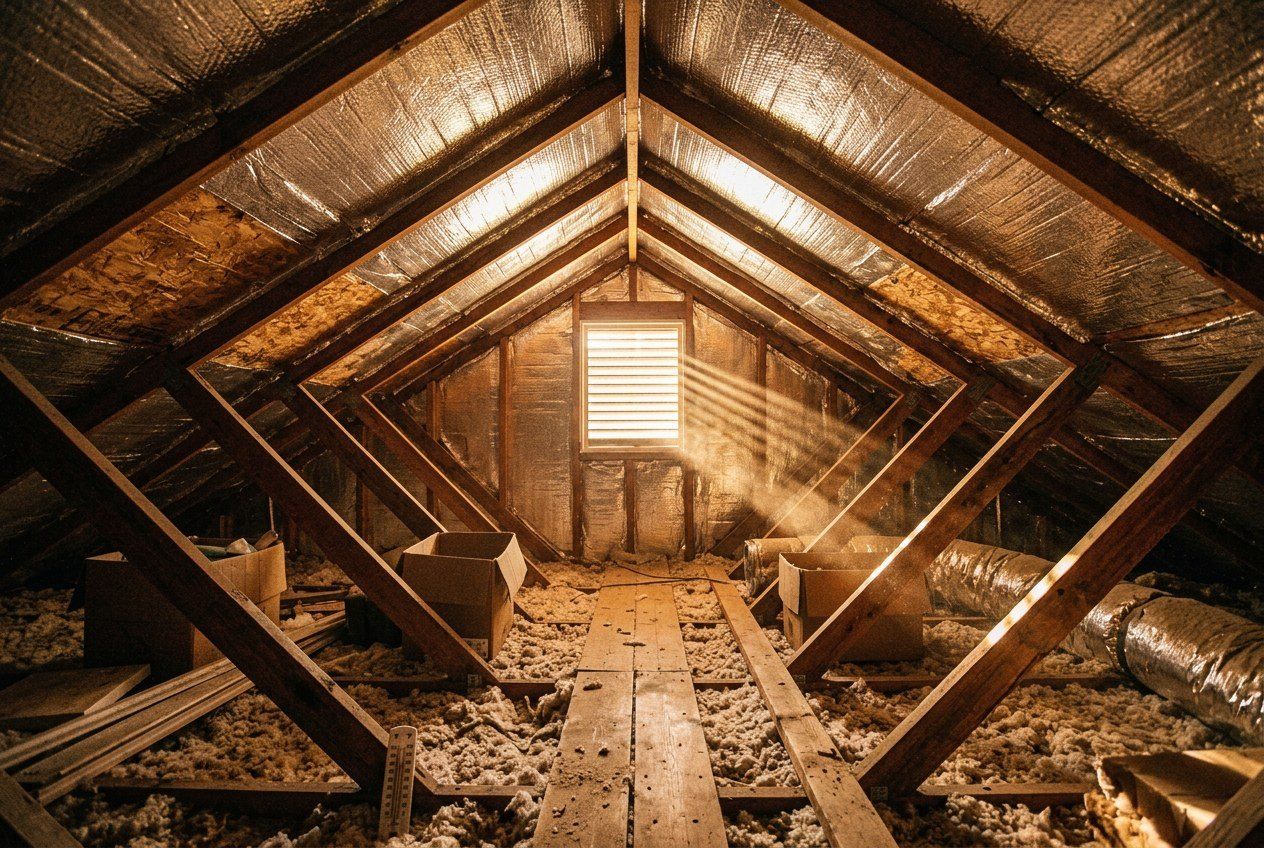
Insulation slows heat; it does not stop air. Sealing the gaps between the house and the attic is the cheapest comfort upgrade most Texas homes can get.
Why it comes first
In a vented attic, the ceiling drywall is the line between conditioned and unconditioned air. Every hole through it lets cooled, dried indoor air escape upward and pulls hot, humid outdoor air in somewhere else. Loose-fill insulation laid over those holes does very little to stop that airflow. ENERGY STAR estimates that homeowners save an average of 15% on heating and cooling costs by air sealing and adding insulation in attics, floors over crawl spaces and accessible basement rim joists; the sealing is the part that makes the insulation work.
It is also much easier to do before new insulation goes in. Once a foot of cellulose covers the attic floor, the leaks are buried.
The leaks worth hunting
- Top plates. The tops of interior walls, where drywall meets the plate, run the length of the house. Seal along both sides with caulk or foam.
- Plumbing and wiring penetrations. Vent stacks, drain pipes and cable holes through the top plates. Canned spray foam works for small gaps.
- Recessed lights. Older cans are often both leaky and not rated for insulation contact. Replace them with IC-rated, airtight (ICAT) fixtures or have an electrician fit approved covers; do not bury non-IC fixtures in insulation.
- Dropped soffits and chases. Boxed-down ceilings over kitchen cabinets and bathtubs are often open to the attic from above. Cover them with rigid foam board or drywall and seal the edges.
- The attic hatch or pull-down stair. Weatherstrip it and add an insulated cover; it is often the single largest uninsulated spot in the ceiling.
- Duct boots and the air handler platform. Gaps around supply registers and return boxes leak in both directions. Seal duct seams with mastic or UL-181 rated tape, not ordinary cloth duct tape.
- Chimneys and flues. Do not use spray foam here. Seal the gap with sheet metal and high-temperature caulk rated for the purpose, and keep insulation the required clearance away.
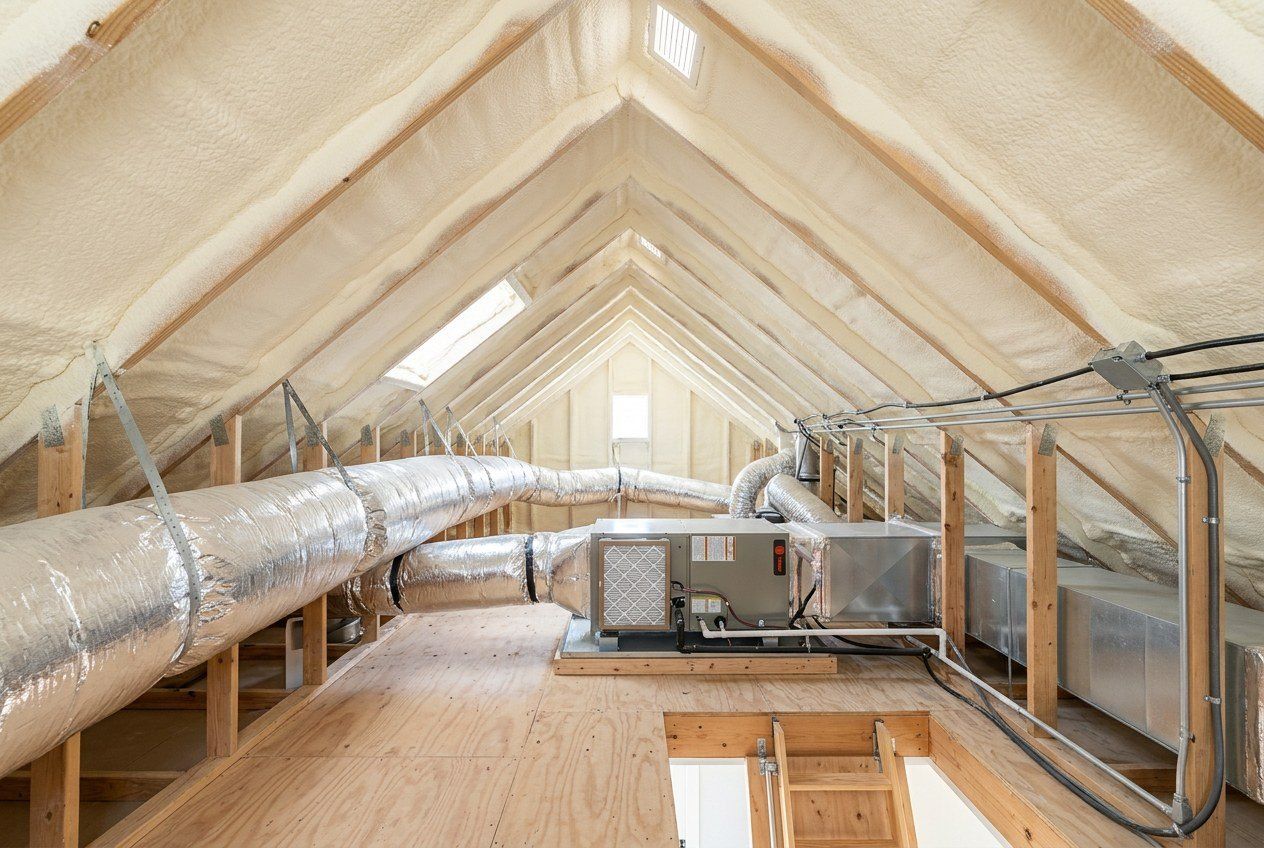
Materials that work
- Caulk for gaps under about a quarter inch.
- One-part canned foam for gaps up to a few inches. Low-expansion foam around window and door frames.
- Rigid foam board or drywall to cover large openings such as chases and soffits, sealed at the edges.
- Fire-rated sealant and metal flashing around flues and chimneys.
- Weatherstripping and a rigid insulated box or cover for the hatch.
The ENERGY STAR do-it-yourself guide to sealing and insulating has step-by-step diagrams for each of these spots.
Safety before you start
- Combustion appliances. Tightening a house can affect how gas water heaters and furnaces vent. If you have atmospherically vented gas appliances, have a professional do a combustion safety test after major sealing, and make sure you have working carbon monoxide alarms.
- Old wiring. If you find knob-and-tube wiring, stop and have an electrician assess it before covering it with insulation.
- Heat. Texas attics are dangerous in summer. Work early in the morning in the cooler months, drink water, and step only on joists or boards, never on the drywall between them.
- Vermiculite. Gray-brown, pebbly loose fill in older homes may contain asbestos. Do not disturb it; the EPA advises leaving it alone and using a trained professional if it must be removed.
DIY or professional?
Sealing the obvious leaks in an accessible attic is a reasonable weekend job. A professional energy auditor adds value with a blower-door test, which depressurizes the house and makes leaks easy to find, and gives you a measured before-and-after number. Some Texas electric utilities have offered rebates or audits through their energy-efficiency programs; check with your retail electric provider or municipal utility. Note that the federal Energy Efficient Home Improvement Credit (Section 25C) ended for work placed in service after December 31, 2025.
Once the ceiling is sealed, move on to depth: how much attic insulation you need, then the choice between blown-in and batts. If the plan is to move the insulation to the roofline instead, read vented vs. unvented attics first.
How to tell it worked
A follow-up blower-door test gives a number. Without one, look for fewer drafts at outlets and light fixtures, less dust on the attic insulation over time, and more even temperatures between rooms.
Frequently asked questions
Should I air seal before adding attic insulation?
Yes. Sealing first is far easier while the attic floor is visible, and new insulation performs much better over a sealed ceiling.
Can I use spray foam around a chimney or flue?
No. Use sheet metal and a high-temperature sealant rated for the purpose, and keep the required clearance between insulation and the flue.
How do I find attic air leaks?
Look for dirty, darkened insulation (air leaking through it leaves dust behind), check top plates and penetrations, or hire an auditor to run a blower-door test.
Is there still a federal tax credit for air sealing?
Not for new work. The Section 25C credit applied to qualifying work placed in service through December 31, 2025.