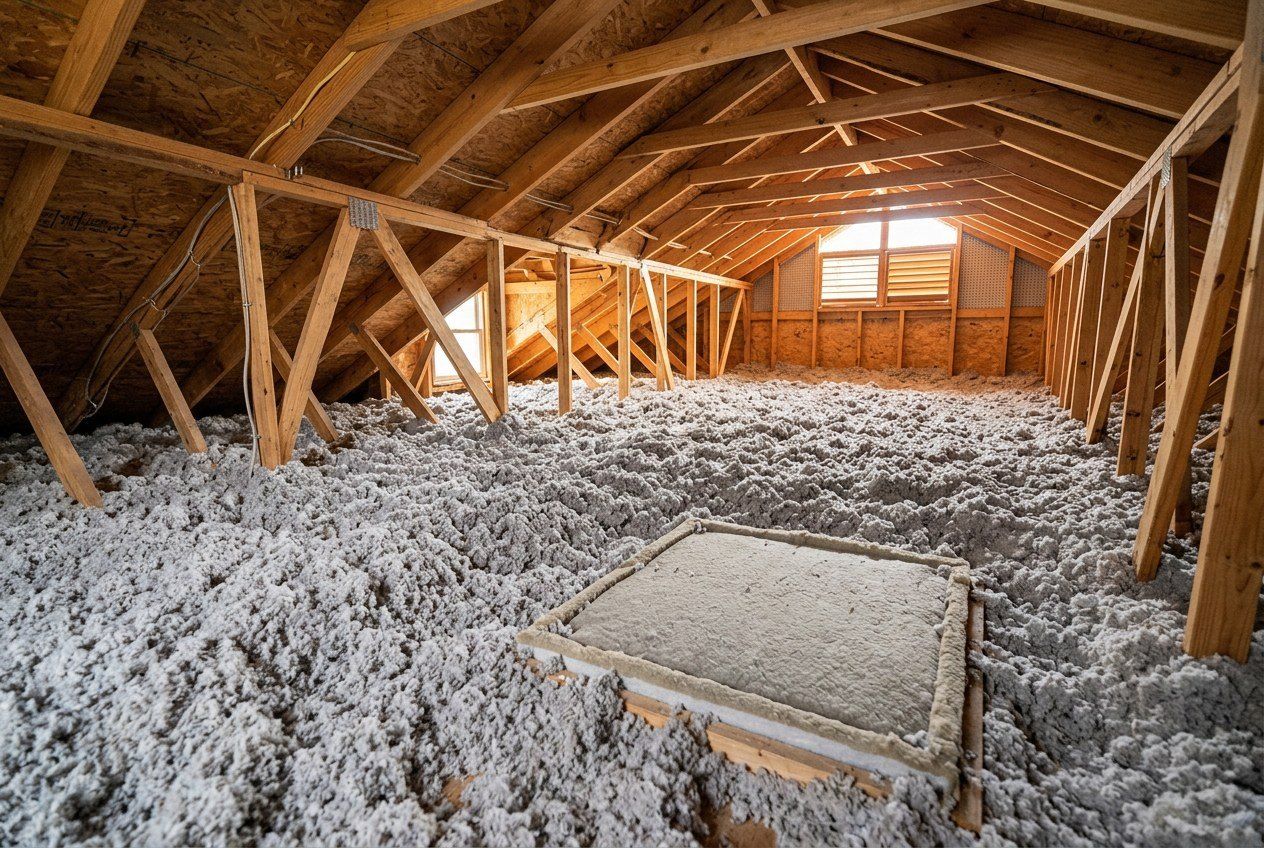
Both materials work well in a Texas attic when they are installed to the right depth. The differences are real but smaller than sales pitches suggest.
What each material is
Cellulose is shredded paper, largely recycled newsprint, treated with borate compounds for fire and pest resistance. It is blown into attics as loose fill or packed densely into closed wall cavities.
Fiberglass is spun glass fiber. In attics it is usually blown as loose fill; it is also sold as batts and rolls. It does not absorb water the way paper does and does not need chemical treatment to resist fire.
R-value per inch
The Department of Energy lists loose-fill cellulose at roughly R-3.2 to R-3.8 per inch and loose-fill fiberglass at roughly R-2.2 to R-2.9 per inch. In practice that means a fiberglass attic needs several more inches to reach the same R-value. For an R-38 target, plan on roughly 10 to 12 inches of cellulose or 13 to 17 inches of fiberglass. Neither is "better" for having more R per inch, because attic floors rarely run out of room. What matters is reaching the target depth everywhere, including over the top plates at the eaves.
The coverage chart on the bag is the reference. It lists the number of bags per 1,000 square feet and the minimum settled thickness for each R-value, and the FTC's R-value Rule requires installers to leave you a receipt showing the thickness, the coverage area and, for loose fill, the number of bags used.
Settling and air movement
Cellulose settles after installation, so bags state an installed and a settled thickness. A good installer blows to the installed depth so the settled depth still meets the target. Loose-fill fiberglass settles less.
Cellulose is denser and slows air movement through the layer more than loose fiberglass does. Neither is an air barrier, though. Air leaking up from the house through top plates, light fixtures and plumbing chases carries heat and humidity straight through either material, which is why attic air sealing should come before any new insulation.
Moisture, pests and dust
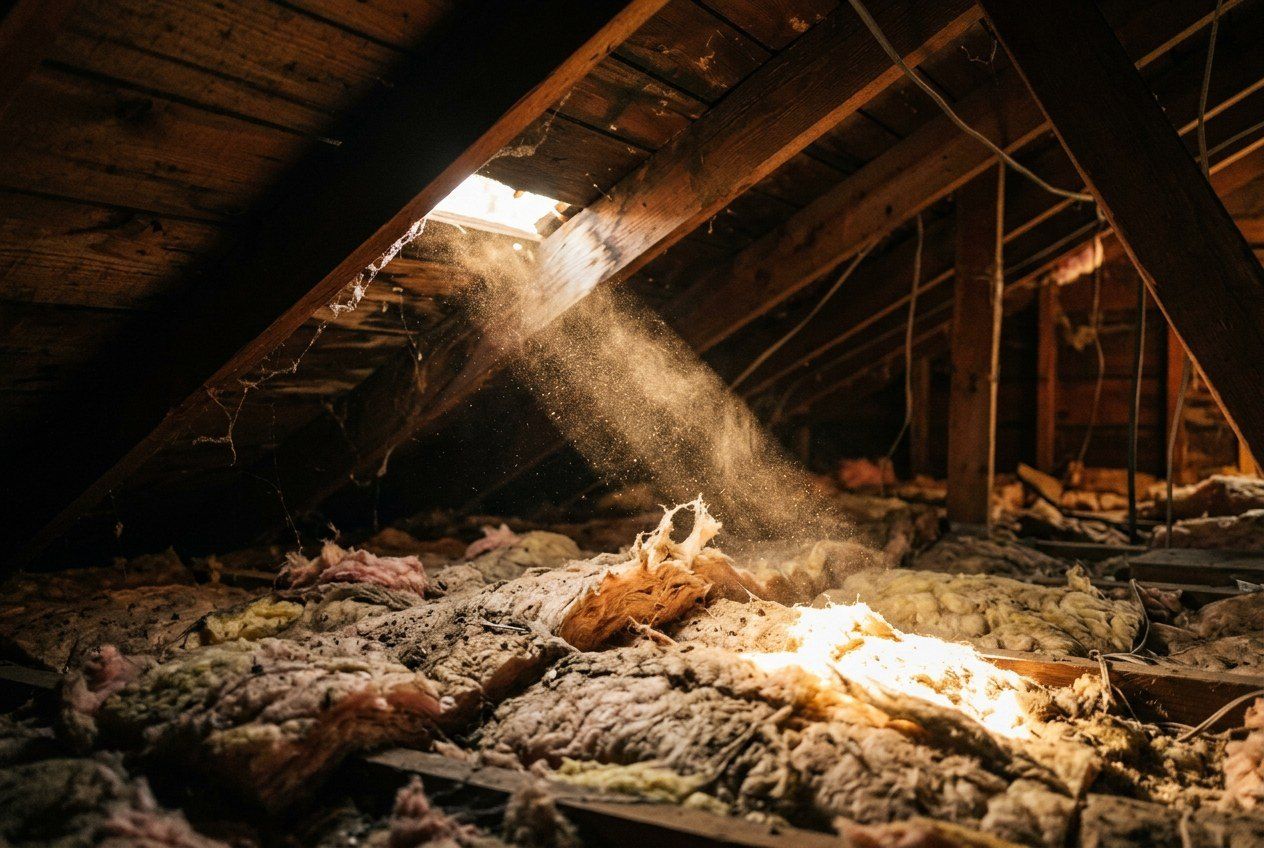
- Roof leaks. Wet cellulose mats down and holds water against the ceiling drywall; it usually has to be removed after a significant leak. Fiberglass drains and dries better but also loses performance while wet. In either case the roof leak is the problem to fix.
- Pests. Borate treatment discourages insects. Rodents will nest in either material.
- Dust. Both are dusty to install. Wear a properly fitted N95 or better respirator, eye protection and long sleeves if you go into the attic during or after the work.
Cost and installation
Material prices move, so compare quotes on the same R-value and the same scope rather than on price per bag. The labor is similar: both are blown from a truck-mounted or rental machine. Many home centers lend a blowing machine with a minimum bag purchase, which makes either material a reasonable DIY job for a homeowner comfortable working in an attic, provided the air sealing and baffles at the eaves are done first.
How to choose
- Choose cellulose if you want the most R-value in a limited depth, better resistance to air washing at the eaves, and recycled content.
- Choose fiberglass if the roof has a history of leaks, if anyone in the house is sensitive to paper dust, or if you are topping up an existing fiberglass layer.
- Either one will perform well if the attic is sealed first and the depth is right. Placing fiberglass over cellulose, or the reverse, is fine.
For context on attic design, see vented vs. unvented attics; for the depths to aim for, see how much attic insulation you need; and for the batts-or-blown question, see blown-in insulation vs. batts.
A note on Texas humidity
Gulf Coast attics see humid air for much of the year. Neither cellulose nor fiberglass is harmed by ordinary humidity; the risk comes from liquid water from roof leaks, plumbing vents and condensation dripping from ducts or the air handler. Insulated, well-sealed ducts and a clear condensate drain line protect any attic insulation, and they matter more than the choice of fill.
Bottom line
Pick the material your installer handles best, seal the ceiling first, and verify the depth before the job is signed off.
Frequently asked questions
Is cellulose or fiberglass better in hot climates?
Both perform well in hot attics when installed to the right depth over a sealed ceiling. Cellulose gives more R per inch; fiberglass handles occasional moisture better.
How much does cellulose settle?
It depends on the product. The bag states both the installed and the settled thickness; the settled figure is the one that must meet your R-value target.
Can I blow cellulose over old fiberglass?
Yes. Adding loose fill over an existing layer is common, as long as the old insulation is dry and free of pest contamination.
Is cellulose a fire risk?
Cellulose is treated with borate fire retardants and must meet federal flammability standards. Keep all insulation the required distance from recessed lights that are not IC-rated and from chimneys and flues.